

Every business generates data, but the real advantage comes from knowing what happens next. Predictive analytics uses historical data, statistical models, and machine learning to forecast future outcomes—so you can act before problems arise.
From reducing customer churn to optimizing inventory and spotting fraud, predictive analytics helps organizations make smarter, faster decisions. This guide explains how it works and how businesses use it in practice.
Introduction
Predictive analytics is one of the most valuable capabilities a modern business can develop. At its core, it uses historical data, statistical algorithms, and machine learning techniques to estimate what is likely to happen next. Instead of simply reporting what already occurred, predictive analytics helps organizations anticipate customer behavior, operational risks, and market shifts before they fully unfold.
This article explores What Is Predictive Analytics and How Do Businesses Use It with clear, practical guidance. Whether you run a small retail shop, manage a marketing team, or oversee operations at a large enterprise, understanding the fundamentals of What Is Predictive Analytics and How Do Businesses Use It helps you make informed decisions. You do not need to be a data scientist to benefit. You need a basic grasp of the concepts, a willingness to ask better questions of your data, and consistent habits around measurement and review.
Throughout this guide, we will cover the essential concepts behind predictive analytics, walk through a practical implementation process, examine industry use cases, and answer common questions. By the end, you should be able to identify where predictive analytics fits in your organization and how to start using it responsibly.
Key Concepts
Before diving into tools and techniques, it helps to understand the vocabulary. Predictive analytics sits on a spectrum of data capabilities that moves from hindsight to foresight.
- Descriptive analytics: Explains what happened. Monthly sales reports and website traffic dashboards fall here.
- Diagnostic analytics: Explains why it happened. Root-cause analysis of a sudden drop in conversions is an example.
- Predictive analytics: Estimates what is likely to happen. Forecasting churn risk or next quarter’s demand belongs here.
- Prescriptive analytics: Recommends what to do about it. Automated pricing adjustments or next-best-action recommendations fit this category.
Predictive models rely on several building blocks. Historical data provides the raw material. Features are the variables the model uses, such as customer tenure, purchase frequency, or seasonal indicators. The target variable is whatever you are trying to predict, like whether a customer will cancel a subscription. Training teaches the model patterns from past examples, while testing checks how well those patterns generalize to new data.
Common model types include regression (predicting a number, like revenue), classification (predicting a category, like “will churn” or “will not churn”), and clustering (grouping similar customers or products). Time-series models specialize in forecasting values that change over time, such as weekly demand or call volume.
It is also important to distinguish correlation from causation. A predictive model may find that customers who call support three times are more likely to leave, but that does not automatically mean the calls cause the departure. Predictive analytics identifies patterns and probabilities, not certainties. Reliable information and consistent habits lead to better long-term outcomes, so treating predictions as one input among many is essential.
Deep Dive
Businesses use predictive analytics across nearly every function. The value comes from turning predictions into decisions that reduce cost, increase revenue, or improve customer experience.
Marketing and Sales
Marketing teams use predictive models to score leads, estimate lifetime value, and personalize offers. Instead of sending the same campaign to everyone, a business can predict which customers are most likely to respond and allocate budget accordingly. Sales teams use propensity models to prioritize outreach, focusing on accounts with the highest likelihood of converting.
Customer Retention
Churn prediction is one of the most common applications. By analyzing usage patterns, billing history, and support interactions, a model can flag customers at risk of leaving. The business can then intervene with a retention offer, a check-in call, or a product tutorial before the customer cancels.
Operations and Supply Chain
Operations teams forecast demand, optimize inventory levels, and schedule maintenance. Predictive maintenance models use sensor data to estimate when equipment will fail, allowing repairs to happen before an unplanned outage. Retailers use demand forecasting to avoid stockouts and reduce excess inventory.
Finance and Risk
Financial institutions use predictive analytics for credit scoring, fraud detection, and collections. A fraud model scores each transaction in real time and flags anomalies for review. Credit models estimate the probability of default, helping lenders price risk more accurately.
Healthcare and Public Sector
Hospitals use predictive models to identify patients at risk of readmission or deterioration. Public agencies use them to forecast demand for services, allocate resources, and detect patterns in safety or compliance data.
Across all these areas, the workflow is similar. You define a question, gather relevant data, build and validate a model, deploy it into a decision process, and monitor results. The technology is important, but the organizational habits around data quality, experimentation, and review matter just as much.
Best Practices
Getting predictive analytics right is less about buying the most advanced software and more about disciplined execution. The following practices consistently separate successful programs from stalled pilots.
- Start with a decision, not a dataset. Identify the specific decision you want to improve, such as which customers to contact or how much inventory to order. Then work backward to the data you need.
- Prioritize data quality. Missing values, inconsistent formats, and duplicate records undermine even the best algorithms. Invest in clean, well-documented data pipelines before scaling models.
- Use simple models first. A logistic regression or decision tree is often easier to explain and maintain than a complex neural network. Start simple, measure performance, and add complexity only when it delivers clear value.
- Validate on unseen data. Always test your model on a holdout set that was not used during training. This reduces the risk of overfitting, where a model performs well on past data but poorly on new situations.
- Monitor for drift. Customer behavior, markets, and operations change over time. Set up regular reviews to check whether model accuracy is declining and retrain when needed.
- Keep humans in the loop. Predictive outputs should inform decisions, not replace judgment. Especially in sensitive areas like credit, hiring, or healthcare, human review helps catch errors and ensures fairness.
- Document assumptions and limitations. Every model has boundaries. Record what data it uses, what it predicts, and where it is not reliable. This builds trust and prevents misuse.
- Measure business impact. Track outcomes such as conversion rate, churn reduction, or cost per order. A model that improves a metric is valuable; a model that only improves an abstract accuracy score may not be.
Reliable information and consistent habits lead to better long-term outcomes. That means scheduling regular reviews, maintaining data hygiene, and treating predictive analytics as an ongoing capability rather than a one-time project.
Step-by-Step Guide to Implementing Predictive Analytics
Step 1: Understand the fundamentals
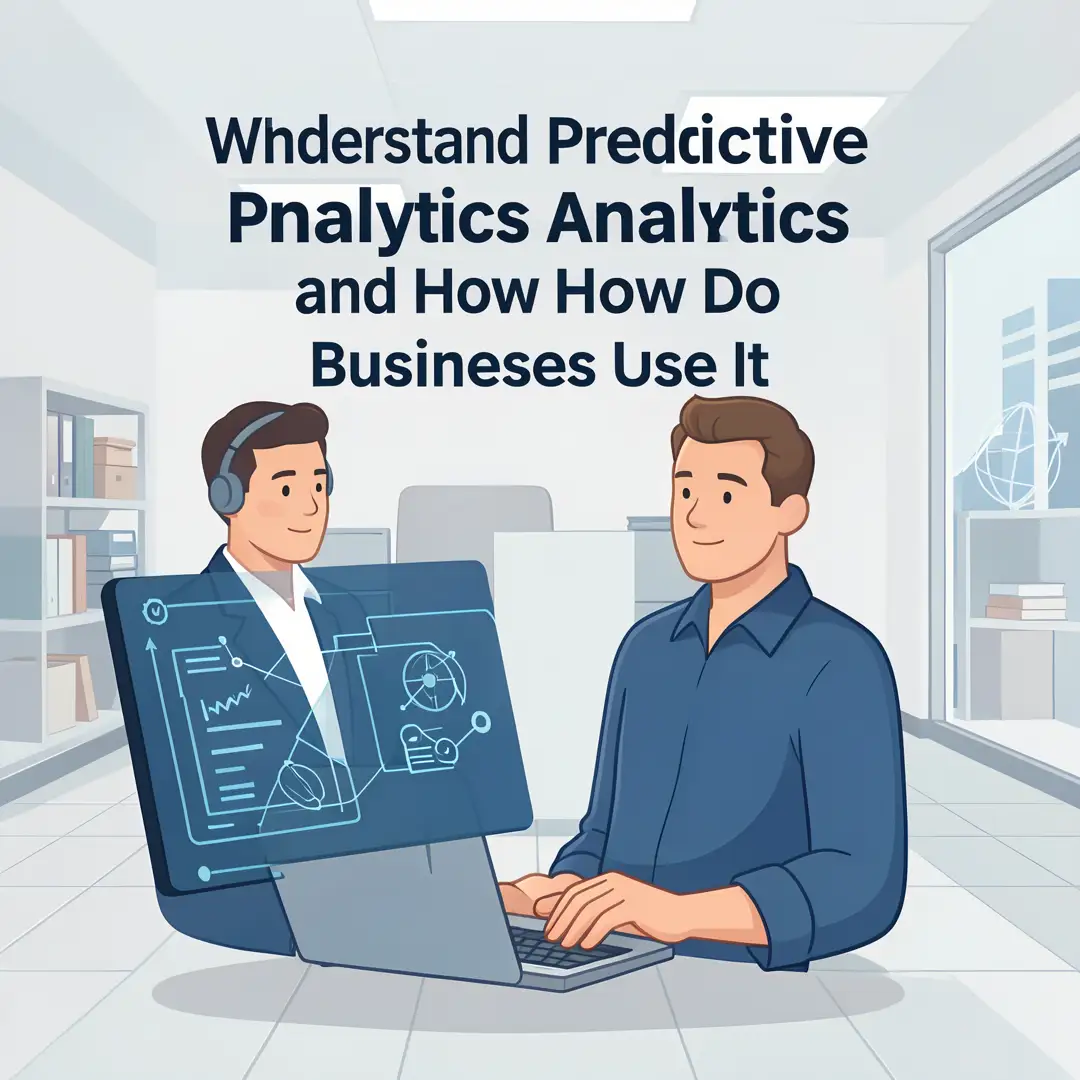
Begin by building shared vocabulary across your team. Make sure everyone understands the difference between descriptive, predictive, and prescriptive analytics. Review examples relevant to your industry, such as churn prediction in subscription businesses or demand forecasting in retail. Understanding the fundamentals of What Is Predictive Analytics and How Do Businesses Use It helps you make informed decisions and avoids costly misunderstandings later.
Step 2: Assess your starting point
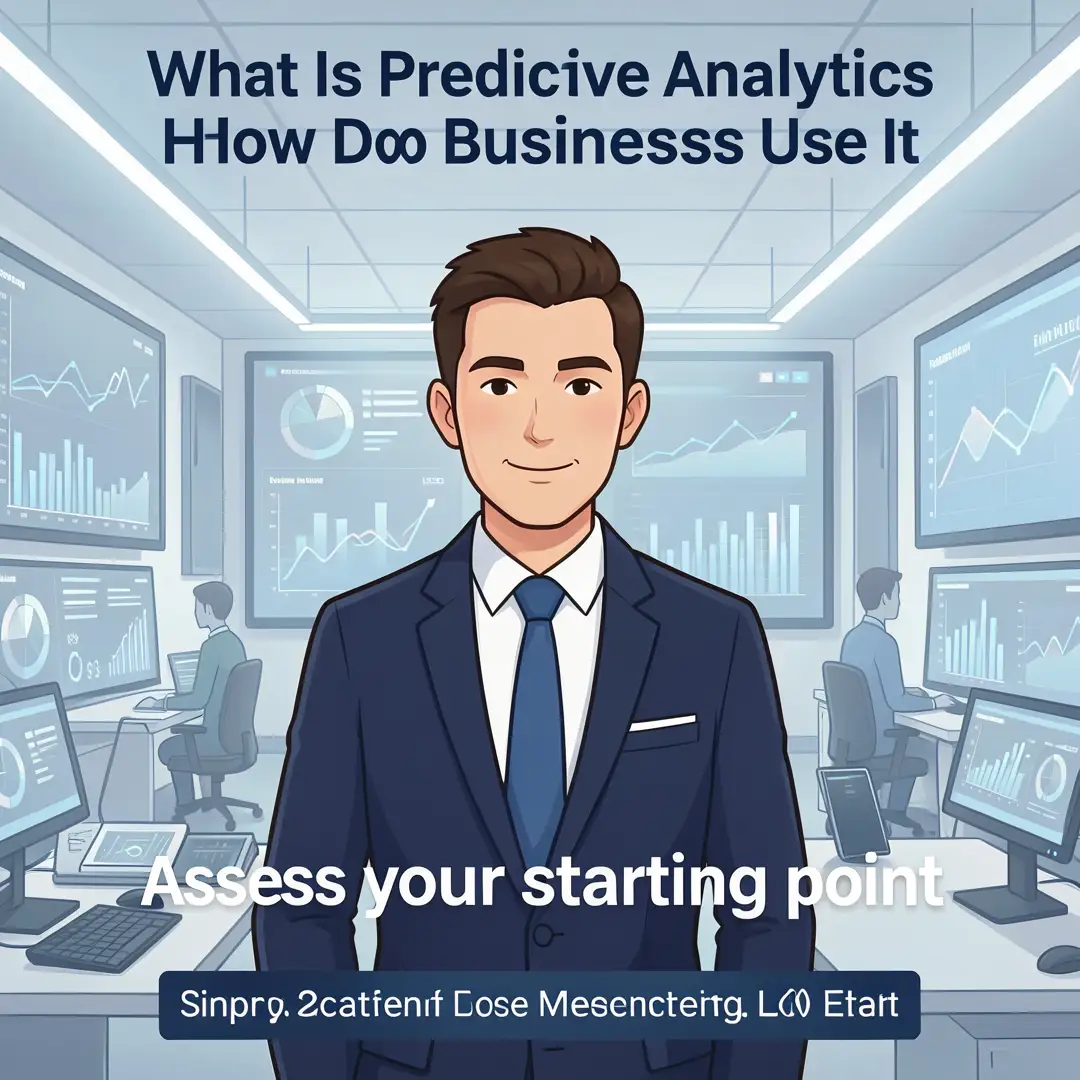
Take stock of your current data and capabilities. What data do you already collect? Where is it stored? How clean and accessible is it? Do you have analysts, data engineers, or external partners who can help? Identify gaps in skills, tools, and data quality. A candid assessment prevents you from overcommitting before the basics are in place.
Step 3: Set clear goals
Define what success looks like in measurable terms. Instead of “use predictive analytics,” aim for “reduce customer churn by 10 percent within two quarters” or “improve forecast accuracy by 15 percent.” Clear goals guide model selection, data collection, and evaluation. They also make it easier to secure buy-in from leadership and stakeholders.
Step 4: Gather necessary resources
Assemble the people, tools, and data you need. This may include a data warehouse, a business intelligence platform, machine learning libraries, and cloud computing capacity. On the human side, you may need data scientists, analysts, domain experts, and decision-makers who will act on the predictions. Budget for training and change management, not just technology.
Step 5: Apply the core methods
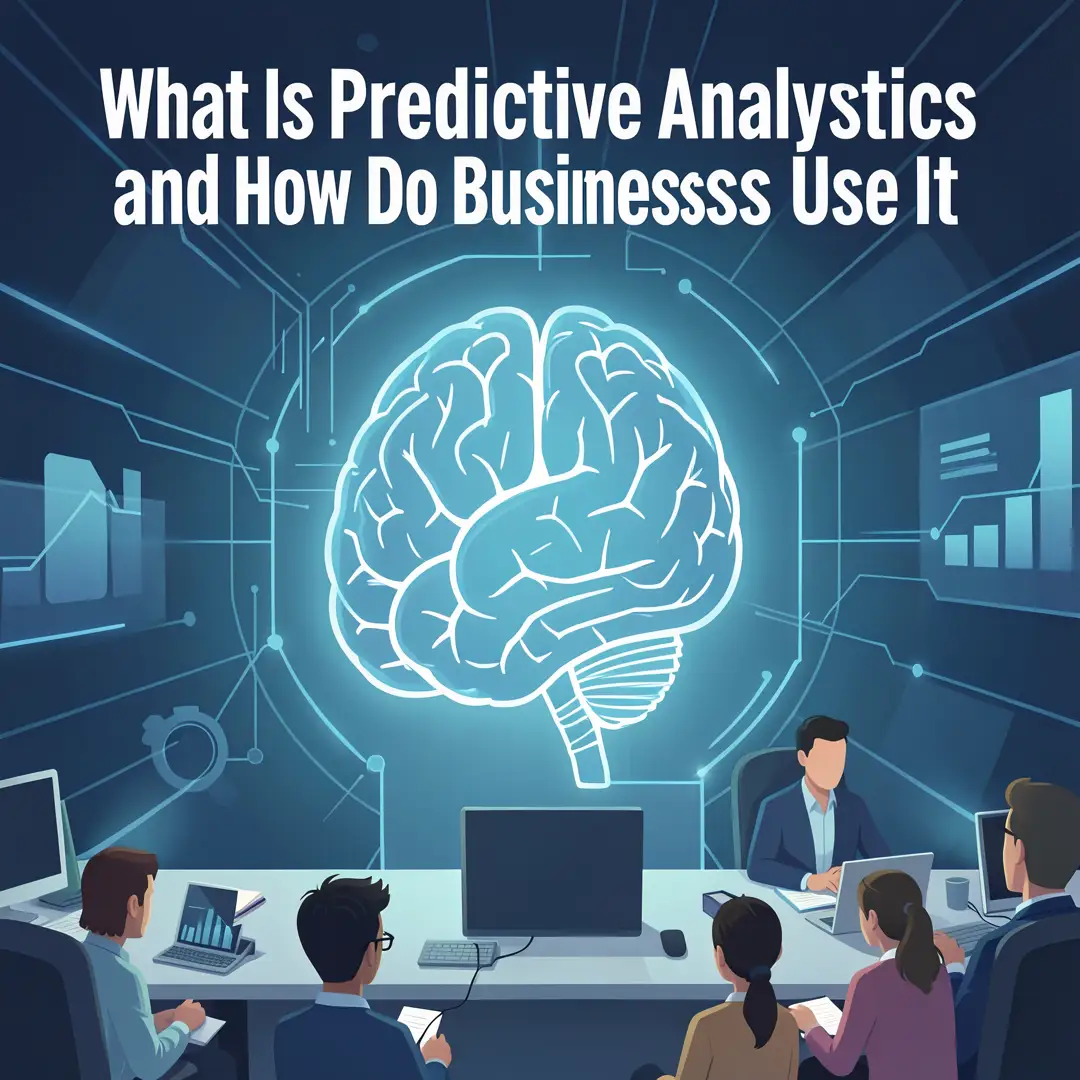
Follow a structured workflow: explore and prepare your data, select and train a model, validate it on holdout data, and deploy it into a real decision process. Start with a pilot project that has a clear scope and a measurable outcome. Iterate based on feedback. Document what works and what does not so the next project moves faster.
Step 6: Monitor your progress
After deployment, track both model performance and business results. Set up dashboards for accuracy, precision, recall, and drift. Schedule regular reviews to compare predictions against actual outcomes. When performance declines, investigate whether the cause is data quality, changing behavior, or an outdated model. Use these reviews to refine your approach and expand to new use cases.
FAQ
What should I know about What Is Predictive Analytics and How Do Businesses Use It?
Predictive analytics uses historical data and statistical or machine learning models to estimate future outcomes. Businesses use it to forecast demand, predict customer churn, score leads, detect fraud, and schedule maintenance. The key takeaway is that predictions are probabilities, not certainties, and their value depends on data quality, clear goals, and consistent monitoring. Start with a specific decision you want to improve, use simple models first, and always measure business impact.
Who is this guide for?
This guide is for business owners, managers, analysts, and students who want a practical, non-technical overview of predictive analytics. It is also useful for teams considering their first analytics project or looking to improve an existing one. No advanced math or programming background is required to understand the concepts and steps outlined here.
Do I need a data science team to get started?
Not necessarily. Many modern tools offer predictive features out of the box. However, for custom models or complex decisions, access to data science expertise helps. You can start small with internal analysts or external consultants and build capability over time.
How much data do I need?
More is generally better, but quality matters more than sheer volume. A few thousand well-documented records can be enough for a focused pilot. The key is that your data includes the variables relevant to the outcome you want to predict and covers a representative period.
You now have a solid foundation for What Is Predictive Analytics and How Do Businesses Use It. Apply the best practices above and revisit this guide as your needs evolve.