
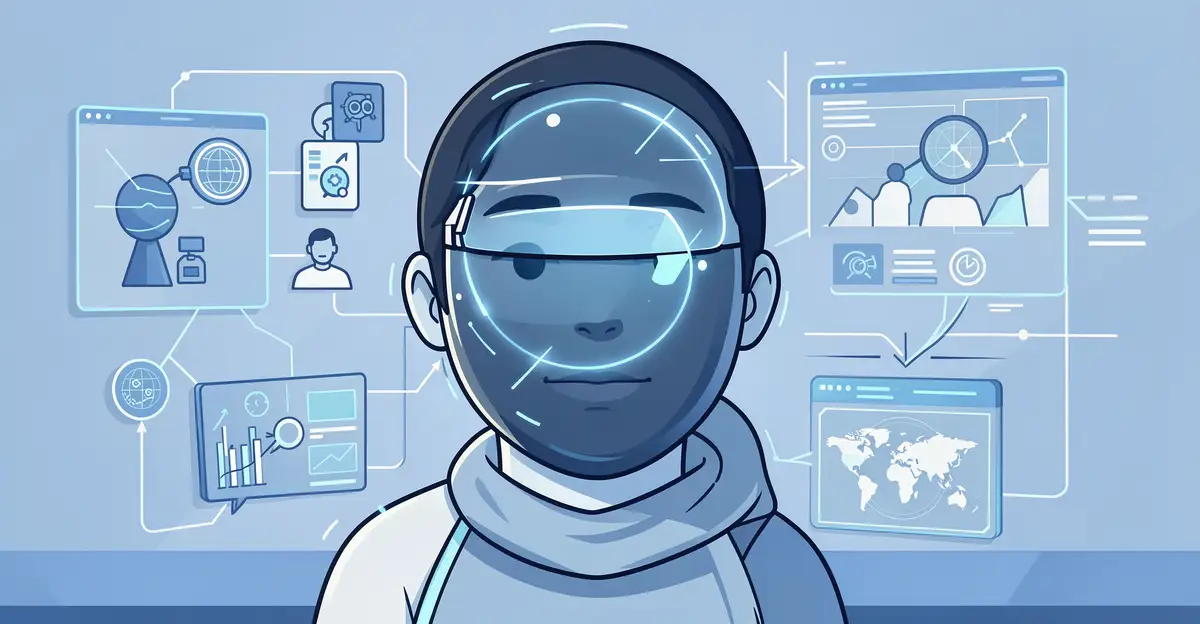
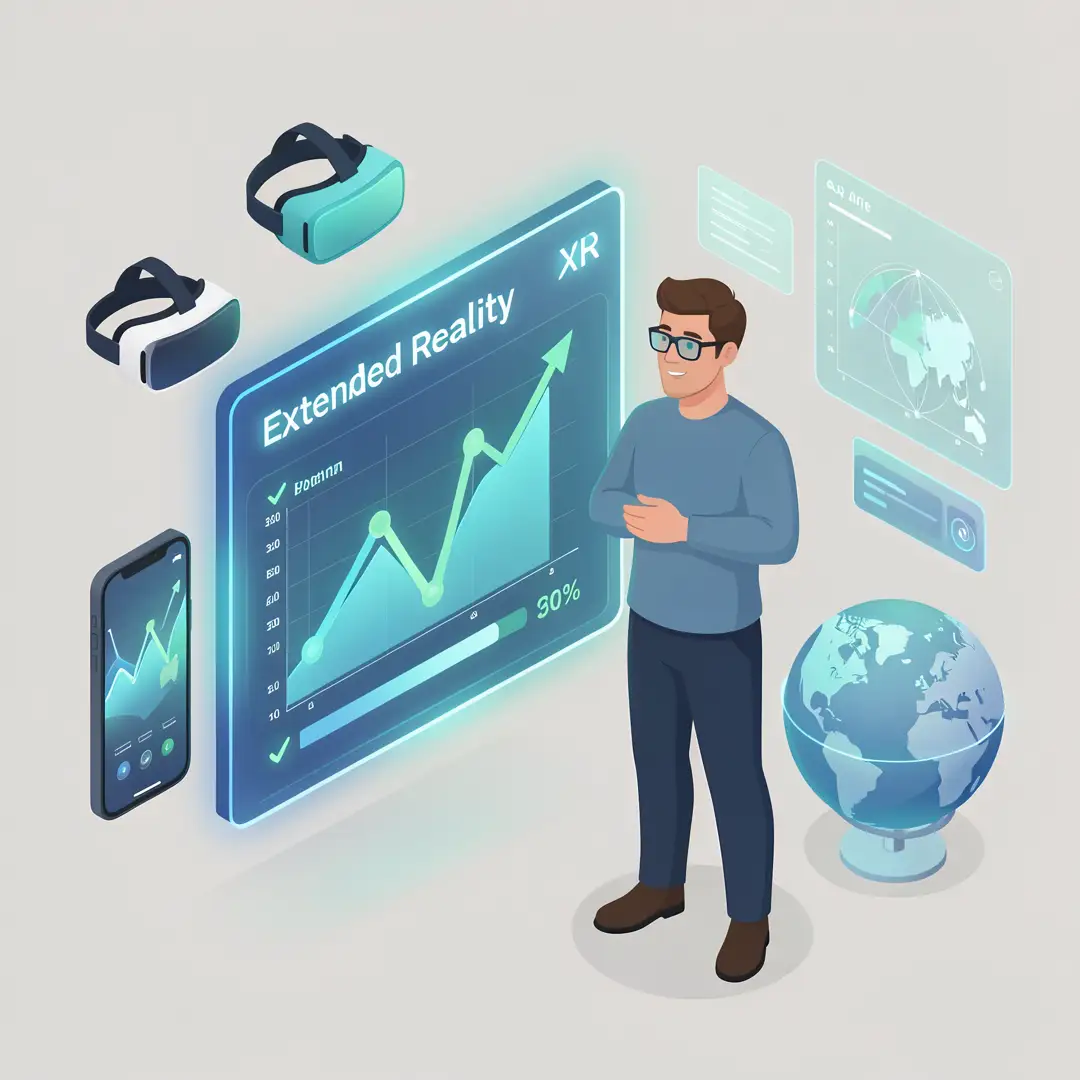
Extended reality (XR) is the umbrella term for immersive technologies that blend the physical and digital worlds—covering virtual reality (VR), augmented reality (AR), and mixed reality (MR). Instead of treating these as separate tools, XR describes the full spectrum of experiences that range from fully simulated environments to subtle digital overlays on your everyday view.
Understanding what extended reality is matters because it’s already changing how people work, learn, and shop. In this article, we’ll break down the key types of XR and show you exactly where it’s used—from healthcare and manufacturing to education and retail—so you can spot real opportunities in your own field.
Introduction
Extended reality (XR) is an umbrella term that covers all immersive technologies that blend the physical and digital worlds. If you have ever used a virtual reality headset, played an augmented reality mobile game, or watched a mixed reality product demo, you have already encountered extended reality in one form or another. The term is not a single device or platform — it is a spectrum. At one end sits virtual reality (VR), where the user is fully immersed in a computer-generated environment. At the other end lies augmented reality (AR), where digital elements are layered onto the real world through a phone camera or smart glasses. Somewhere in the middle is mixed reality (MR), where virtual objects are not just overlaid but interact with real-world surfaces and respond to physical space.
This article explores What Is Extended Reality and Where Is It Used with clear, practical guidance. Rather than treating XR as a futuristic buzzword, we will break down the actual components, show you where the technology is already deployed today, and give you a step-by-step framework for evaluating or adopting it. Understanding the fundamentals of What Is Extended Reality and Where Is It Used helps you make informed decisions — whether you are a student, a business professional, a developer, or simply a curious reader trying to separate real-world use cases from marketing hype.
The stakes are higher than they might appear. XR is already reshaping training, healthcare, retail, education, and manufacturing. According to industry analyses, the global XR market is projected to grow substantially through the late 2020s, driven by cheaper hardware, faster networks, and more mature software tools. Yet many people still confuse XR with science fiction or assume it requires expensive equipment they cannot access. The truth is more nuanced: reliable information and consistent habits lead to better long-term outcomes, and that principle applies directly to how you learn and apply XR concepts. By the end of this guide, you will have a working vocabulary, a map of real applications, and an actionable plan for engaging with extended reality in a way that fits your goals.
Key Concepts
Before diving into applications, it is worth clarifying the vocabulary. Extended reality is often described as a continuum rather than a category. On this continuum, the level of digital immersion increases as you move from the real environment toward a fully virtual one. Understanding where each technology sits helps you choose the right tool for a given task.
- Virtual Reality (VR): A fully immersive experience where the user wears a headset that blocks out the physical world. The environment is entirely computer-generated. VR is commonly used for gaming, flight simulation, exposure therapy, and skills training.
- Augmented Reality (AR): Digital content is overlaid onto the real world, typically through a smartphone camera or AR glasses. The physical environment remains visible. Examples include furniture placement apps, navigation overlays, and interactive packaging.
- Mixed Reality (MR): A hybrid where virtual objects are anchored to and interact with real-world surfaces. You can walk around a virtual object, and it will respond to your physical space. Microsoft HoloLens and some newer headsets fall into this category.
- Extended Reality (XR): The collective term for VR, AR, MR, and any future immersive technology that merges physical and digital experiences.
Several enabling technologies make XR possible. Spatial tracking uses cameras and sensors to map your position in a room. Haptic feedback uses vibration or force to simulate touch. Eye tracking and hand tracking allow you to interact without controllers. Cloud rendering and 5G networks reduce the need for heavy local hardware. Each of these components has matured significantly in recent years, which is why XR has moved from research labs into commercial and consumer settings.
Another key concept is the distinction between tethered and standalone devices. Tethered headsets connect to a PC or console and offer higher fidelity but limit mobility. Standalone headsets have onboard processing and are easier to deploy in classrooms, clinics, and factory floors. For most beginners, standalone or mobile-based XR is the most accessible entry point.
Finally, it is important to distinguish XR from related terms like the metaverse. The metaverse is a broader vision of persistent, interconnected virtual worlds. XR is one set of technologies that could help build and access those worlds, but XR also exists entirely offline and in single-user applications. Keeping this distinction clear prevents confusion when reading news or vendor claims.
Deep Dive
Now that the terminology is clear, let us examine where extended reality is actually used today. The applications are broader than most people expect, and they span industries that affect daily life.
Healthcare and Medicine
XR is transforming medical training and patient care. Surgical residents use VR simulators to practice complex procedures without risk to patients. AR is used during surgery to overlay anatomical data onto the patient’s body in real time. In rehabilitation, VR games help stroke patients regain motor function by making repetitive exercises engaging. Mental health professionals use VR exposure therapy to treat phobias and post-traumatic stress disorder in controlled, safe environments.
Education and Training
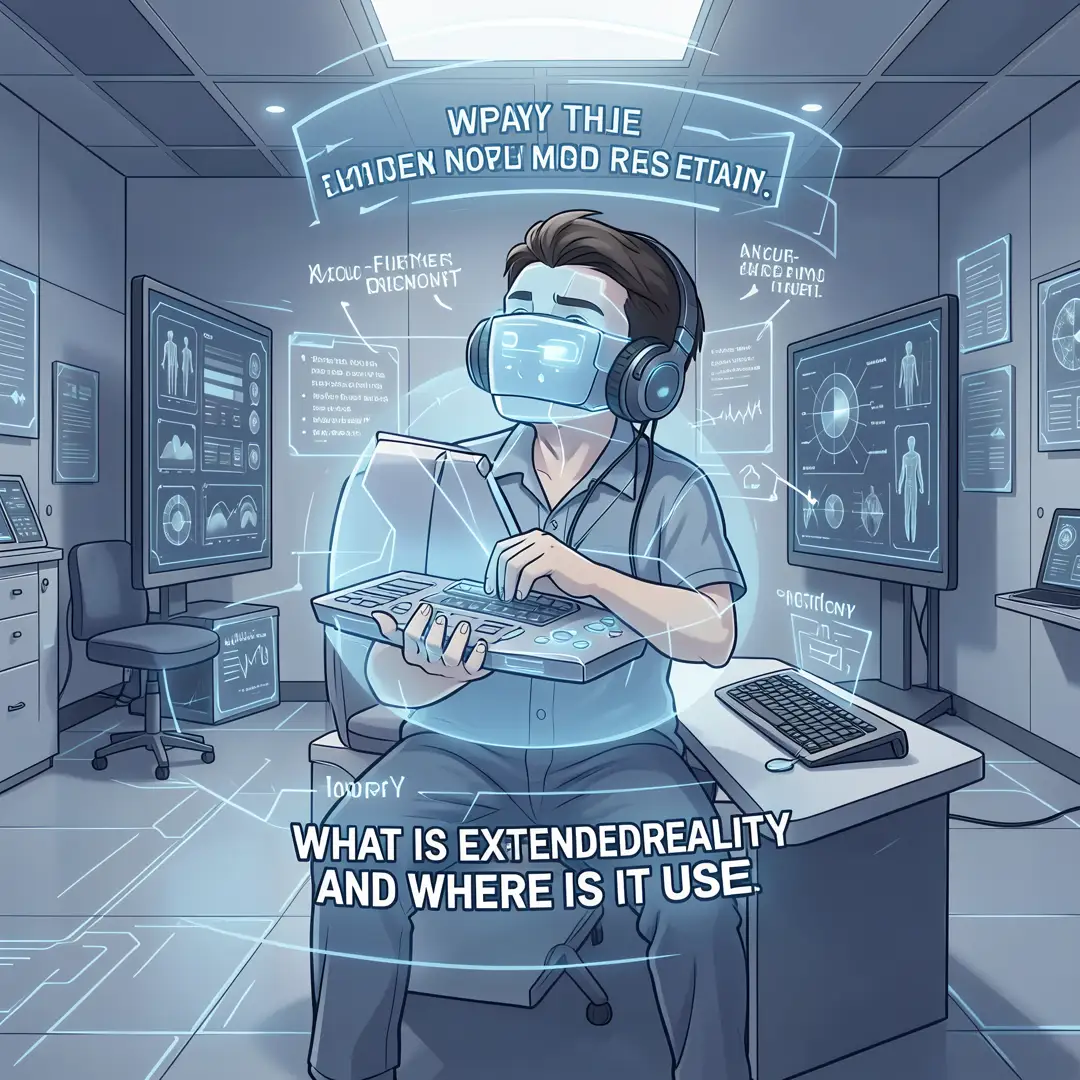
Schools and universities are adopting XR to make abstract concepts tangible. Students can explore the inside of a cell, walk through historical sites, or practice chemistry experiments without expensive lab equipment. Corporate training programs use VR to simulate dangerous scenarios — fire evacuation, heavy machinery operation, or conflict resolution — allowing employees to learn from mistakes without real-world consequences. Studies consistently show that immersive training improves retention compared to passive video or reading alone.
Retail and E-Commerce
AR is already mainstream in retail. Furniture retailers let customers place virtual sofas in their living rooms before buying. Cosmetics brands offer virtual try-on for makeup. Eyewear companies use facial tracking to show how glasses fit. These applications reduce return rates and increase buyer confidence. VR showrooms allow customers to explore products in a 3D space, and some automotive brands use XR configurators so buyers can customize a vehicle before it is built.

Manufacturing and Engineering
On the factory floor, AR glasses guide workers through assembly steps, display torque specifications, and flag quality issues. Engineers use VR to prototype designs and run virtual stress tests before committing to physical materials. Remote experts can use MR to annotate a machine in a technician’s field of view, reducing downtime and travel costs. This is one of the most mature and measurable XR use cases, with clear returns on investment.

Entertainment and Media
Gaming remains the most visible XR application, but entertainment extends further. Live concerts and sports events are broadcast in VR, giving remote audiences a courtside or front-row perspective. Film studios use VR for previsualization, letting directors block scenes in a virtual set before shooting. Location-based entertainment centers offer free-roam VR experiences that combine physical movement with digital worlds.
Real Estate and Architecture
Virtual property tours allow buyers to explore homes from another city. Architects use VR to walk clients through buildings that exist only as blueprints. AR apps help homeowners visualize renovations, from new paint colors to full room redesigns, without lifting a tool.
The common thread across all these sectors is the ability to compress time, reduce risk, and lower cost. XR lets people practice, preview, and iterate in ways that were previously impossible or prohibitively expensive. Understanding the fundamentals of What Is Extended Reality and Where Is It Used helps you make informed decisions about which applications are relevant to your work or interests.
Best Practices
If you are considering adopting XR — whether for personal learning, a classroom, or an entire organization — following established best practices will save time and prevent common pitfalls.
- Start with the problem, not the technology. Define the specific challenge you want to solve. XR is a tool, not a strategy. If a simpler solution works, use it.
- Choose the right point on the continuum. Not every task needs full VR immersion. AR or MR may be more practical, cheaper, and safer for many use cases.
- Prioritize comfort and accessibility. Poorly designed XR causes motion sickness, eye strain, and fatigue. Ensure sessions are short, provide breaks, and offer seated options. Consider users with disabilities and design inclusive interfaces.
- Invest in content quality. Hardware is only half the equation. High-quality, well-tested content determines whether an XR experience succeeds or fails.
- Measure outcomes. Decide in advance what success looks like — faster training, higher retention, fewer errors, increased sales — and track those metrics consistently.
- Keep data privacy and safety in mind. XR devices collect spatial data, biometric data, and usage patterns. Follow privacy regulations and be transparent with users about what is collected.
- Plan for maintenance and support. Devices need updates, cleaning, charging, and technical support. Budget for these ongoing costs.
Reliable information and consistent habits lead to better long-term outcomes. This means staying current with XR developments, testing new tools in small pilots, and gradually scaling what works rather than chasing every new device that hits the market.
Step-by-Step Guide
The following six-step framework will help you move from curiosity to confident application of extended reality.
Step 1: Understand the fundamentals
Begin by learning the core vocabulary and distinctions: VR, AR, MR, and XR. Identify the hardware categories (tethered, standalone, mobile) and the key enabling technologies (spatial tracking, haptics, eye tracking). Read reputable sources, watch demonstrations, and if possible, try a basic headset or AR app. You cannot make good decisions about a technology you have never experienced. This step is about building a mental model, not becoming an expert overnight.
Step 2: Assess your starting point
Take stock of your current situation. What hardware do you already have access to? What is your budget? What technical skills do you or your team possess? Are there existing XR initiatives in your organization or community? If you are an individual, consider whether a smartphone-based AR app is enough to start. If you are an organization, audit your training, design, or customer engagement processes to find gaps where XR might add value. Honest assessment prevents wasted effort.
You now have a solid foundation for What Is Extended Reality and Where Is It Used. Apply the best practices above and revisit this guide as your needs evolve.