
Imagine downloading a full-length movie in seconds—simply by sitting under a desk lamp. That’s the promise of Li-Fi technology, a wireless communication method that transmits data through visible light instead of radio waves. Using everyday LED bulbs, Li-Fi delivers blazing-fast speeds, stronger security, and less congestion than traditional Wi-Fi.
In this article, we explain how Li-Fi works, where it shines, and what it means for your home, office, and connected devices. Read on to discover whether light-based internet is ready for prime time—and how it could reshape the way you get online.
Introduction
Wireless communication has become the invisible backbone of modern life. From streaming video on a phone to running smart factories, we depend on radio waves to carry enormous amounts of data through the air. But the radio frequency spectrum is finite, and in crowded spaces it is increasingly congested, expensive, and vulnerable to interference. Li-Fi, or Light Fidelity, offers a radically different approach: using visible light to transmit data. This article explores How Li-Fi Technology Could Change Wireless Communication with clear, practical guidance. You will learn what Li-Fi is, how it works, where it already shows promise, and what steps you can take to evaluate it for your own home, office, or project.
Li-Fi is not a replacement for Wi-Fi in every situation. Instead, it is a complementary technology that shines in specific environments where radio waves struggle. Understanding the fundamentals of How Li-Fi Technology Could Change Wireless Communication helps you make informed decisions. Whether you are a technology enthusiast, an IT manager, or a student researching the future of connectivity, this guide gives you a grounded, actionable view. Reliable information and consistent habits lead to better long-term outcomes, and that principle applies just as much to adopting a new wireless standard as it does to personal productivity.
We will move from the basic physics of light-based data transmission to real-world applications, then walk through a step-by-step process for assessing Li-Fi in your own context. By the end, you will know the key trade-offs, the current limitations, and the practical moves that make sense today.
Key Concepts
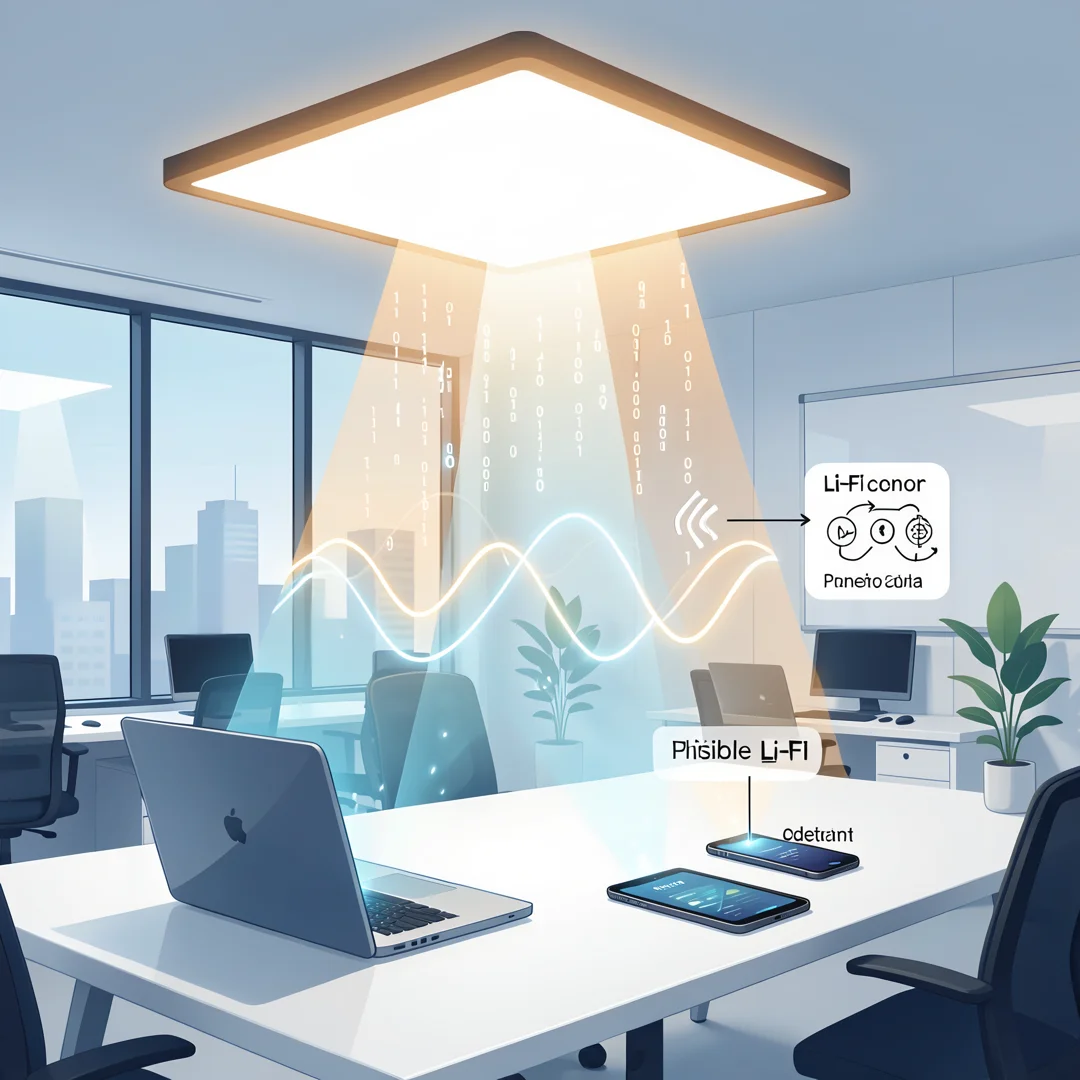
To understand Li-Fi, you first need to understand a few core ideas. Li-Fi transmits data by modulating the intensity of light at speeds too fast for the human eye to detect. An LED light can be switched on and off millions of times per second. When it is on, it represents a binary one; when off, a zero. Because the flickering happens at such high frequencies, the light appears steady to anyone in the room. A photodetector on the receiving device captures these rapid changes and converts them back into digital data.
Several key concepts make Li-Fi practical and distinct from existing wireless technologies:
- Visible light spectrum: Li-Fi uses the unlicensed visible light spectrum, which is roughly 10,000 times larger than the entire radio spectrum. This enormous bandwidth is one reason Li-Fi can achieve very high data rates.
- Line of sight: Light does not pass through opaque walls. This is both a security feature and a limitation. A Li-Fi signal stays within the room or beam, making it harder for outsiders to intercept.
- No electromagnetic interference: Unlike Wi-Fi, Li-Fi does not produce radio frequency emissions. This makes it safe for use near sensitive electronics, in hospitals, and inside aircraft cabins.
- Dual use of lighting: Since LED lighting is already common, Li-Fi can piggyback on existing infrastructure. The same fixture that illuminates a room can also stream data.
- Bidirectional communication: Early Li-Fi systems used light only for downlink and Wi-Fi or infrared for uplink. Modern systems can use light for both directions, though this often requires a dedicated transmitter near the device.
Another important concept is the difference between Li-Fi and older infrared communication. Infrared remote controls use a single, slow data stream. Li-Fi uses arrays of LEDs and advanced modulation schemes like OFDM (Orthogonal Frequency Division Multiplexing) to pack many parallel data streams into the light. This is similar to how modern Wi-Fi and cellular networks squeeze more capacity out of radio waves.
Finally, it helps to distinguish Li-Fi from other optical wireless technologies such as Free Space Optics (FSO). FSO uses laser beams for long-distance, outdoor point-to-point links, often between buildings. Li-Fi is designed for indoor, short-range, multi-user networking. Both are optical, but their use cases and engineering challenges differ significantly.

Deep Dive
Li-Fi has been researched for over a decade, and commercial products are now entering the market. The most common implementation uses a ceiling-mounted LED luminaire that contains a driver capable of modulating light at high speed. A small dongle or embedded receiver on a laptop, tablet, or IoT device detects the light and decodes the data. The theoretical peak speeds in laboratory settings have exceeded 100 gigabits per second, though real-world products typically deliver between 100 megabits and several gigabits per second depending on distance, alignment, and ambient light conditions.
Where does Li-Fi shine? Consider these environments:
- Hospitals and healthcare: MRI rooms and intensive care units often restrict radio transmissions because they can interfere with medical devices. Li-Fi provides connectivity without that risk. It also avoids the electromagnetic pollution that some patients and staff prefer to minimize.
- Aircraft cabins: Passengers want streaming entertainment, but radio waves can interfere with avionics. Li-Fi can be integrated into cabin lighting to deliver high-speed internet to each seat without adding radio noise.
- Industrial settings: Factories and power plants contain heavy machinery that generates electromagnetic interference. Li-Fi is immune to it, making it reliable in these harsh environments.
- Underwater communication: Radio waves attenuate quickly in water. Light, especially blue and green wavelengths, travels much farther. Li-Fi is being explored for underwater drones, divers, and subsea sensors.
- High-security spaces: Government offices, military command centers, and financial trading floors value the fact that Li-Fi signals do not leak through walls. Eavesdropping requires direct line of sight and physical proximity.
- Smart cities and retail: Streetlights and store LED lighting can double as data beacons, delivering location-specific information, advertisements, or navigation aids to users’ devices.
Despite these advantages, Li-Fi faces real challenges. The most obvious is that light cannot penetrate walls. In a home or office with multiple rooms, you would need a Li-Fi access point in each room, or you would fall back to Wi-Fi when you leave the light’s coverage. This makes Li-Fi a room-by-room solution rather than a whole-building replacement. Another challenge is uplink. Sending data from a device back to the ceiling light requires either a light source on the device (which drains battery and adds cost) or a hybrid approach using Wi-Fi or infrared for the return path.
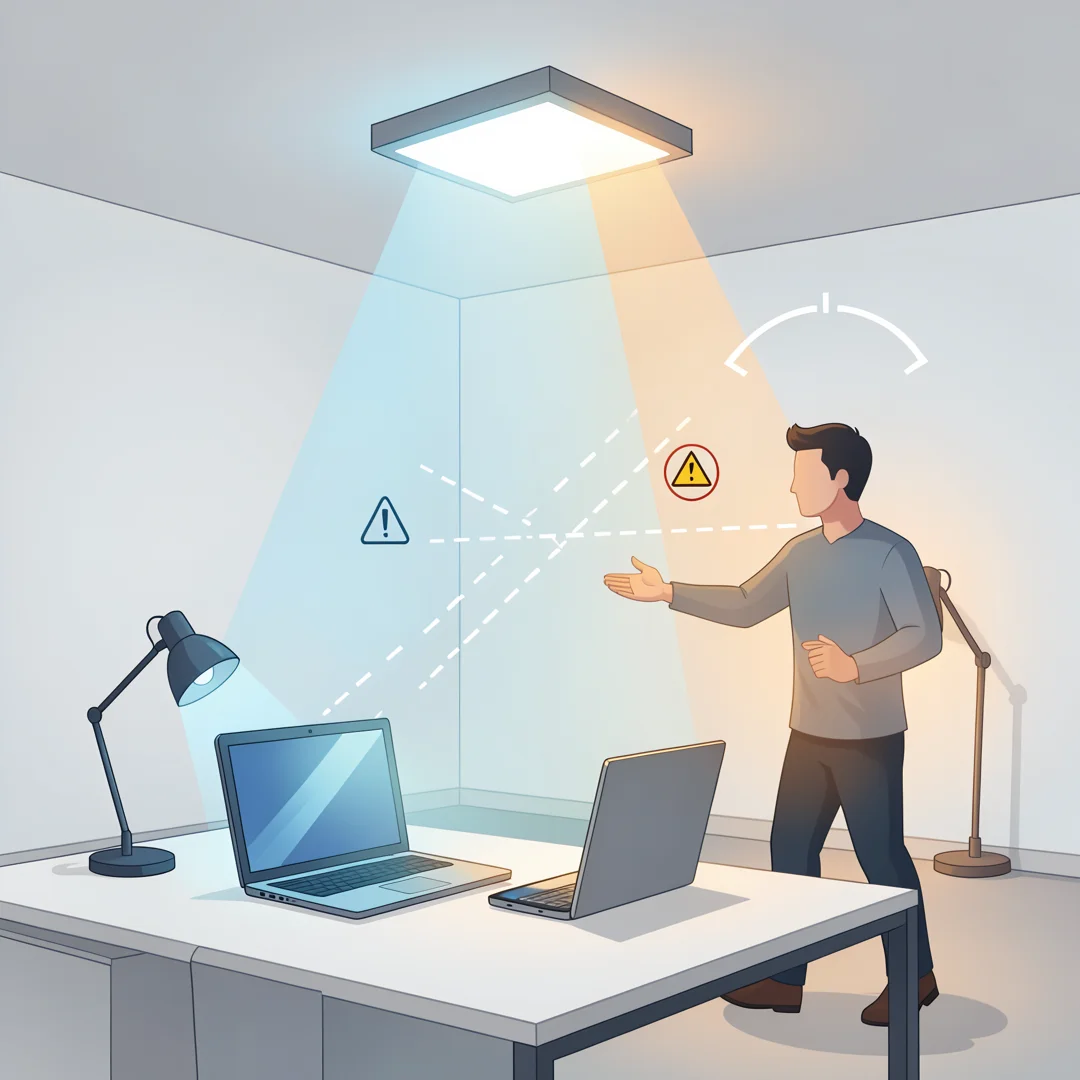
Ambient light interference is another consideration. Strong sunlight or other bright light sources can overwhelm the Li-Fi signal, reducing reliability. Engineers mitigate this with optical filters and modulation schemes that ignore steady background light. But in a sunlit room with large windows, performance may drop. Alignment also matters. The receiver must have a clear path to the transmitter. If you block the light with your hand or turn your laptop away, the connection breaks. This is a feature for security but a bug for casual use.
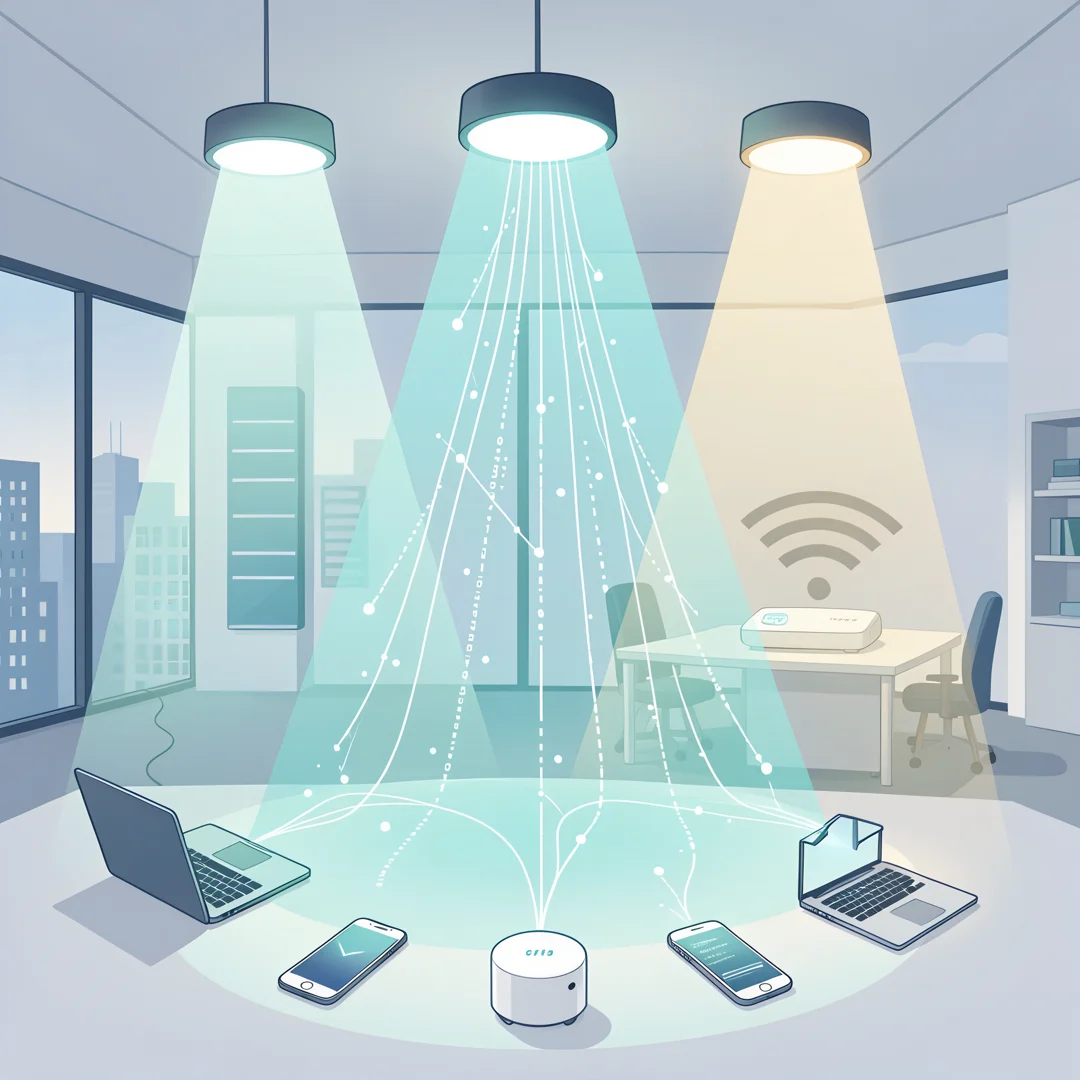
Recent developments are addressing these issues. Multi-cell Li-Fi networks use overlapping light beams and handover protocols, similar to cellular networks, so a device can move from one light to another without dropping the connection. Color-based Li-Fi uses red, green, and blue LEDs independently, multiplying data rates. And hybrid systems combine Li-Fi downlink with Wi-Fi uplink, giving users the best of both worlds: high-speed, secure downloads from the light and familiar, reliable returns via radio.
Best Practices
If you are considering Li-Fi for a project, pilot, or personal setup, following a few best practices will save time and prevent frustration. First, define your use case narrowly. Li-Fi is not a blanket replacement for Wi-Fi. It is a targeted solution for high-density, high-security, or interference-sensitive environments. Start with one room or one specific application, such as a conference room, a hospital imaging suite, or a factory control panel.
Second, verify that your infrastructure can support it. You need LED lighting that is compatible with Li-Fi drivers, a reliable power supply, and a receiver on each client device. If you are retrofitting, check whether your existing fixtures can be upgraded or whether you need new luminaires. Third, plan for the uplink. Decide whether you will use a hybrid approach with Wi-Fi, an infrared return channel, or a full Li-Fi bidirectional system. Each has trade-offs in cost, complexity, and performance.
Fourth, test with real users in real conditions. Lab tests rarely capture the messiness of a sunlit office, a cluttered warehouse, or a room full of moving people. Run a pilot for at least a few weeks and gather feedback on coverage, speed, and reliability. Fifth, document everything. Keep a record of which lights serve which areas, how devices connect, and what happens when the light is blocked. This documentation becomes invaluable when you scale or troubleshoot.
Finally, stay informed about standards. The IEEE 802.11bb standard, published in 2023, provides a global framework for light-based communications. Adopting standards-compliant equipment ensures interoperability and future-proofing. Reliable information and consistent habits lead to better long-term outcomes, so build a habit of checking for updates from standards bodies and vendors.
Step-by-Step Guide
Use the following steps to evaluate and adopt Li-Fi in a structured, low-risk way.
Step 1: Understand the fundamentals
Before you buy anything, make sure you and your team understand how Li-Fi works. Read introductory material, watch a few technical demos, and clarify the difference between Li-Fi, Wi-Fi, and infrared. You should be able to explain line-of-sight requirements, modulation, and the uplink challenge in your own words. If you cannot, you are not ready to move forward. Consider taking a short online course or attending a webinar from a reputable vendor or university lab.
Step 2: Assess your starting point
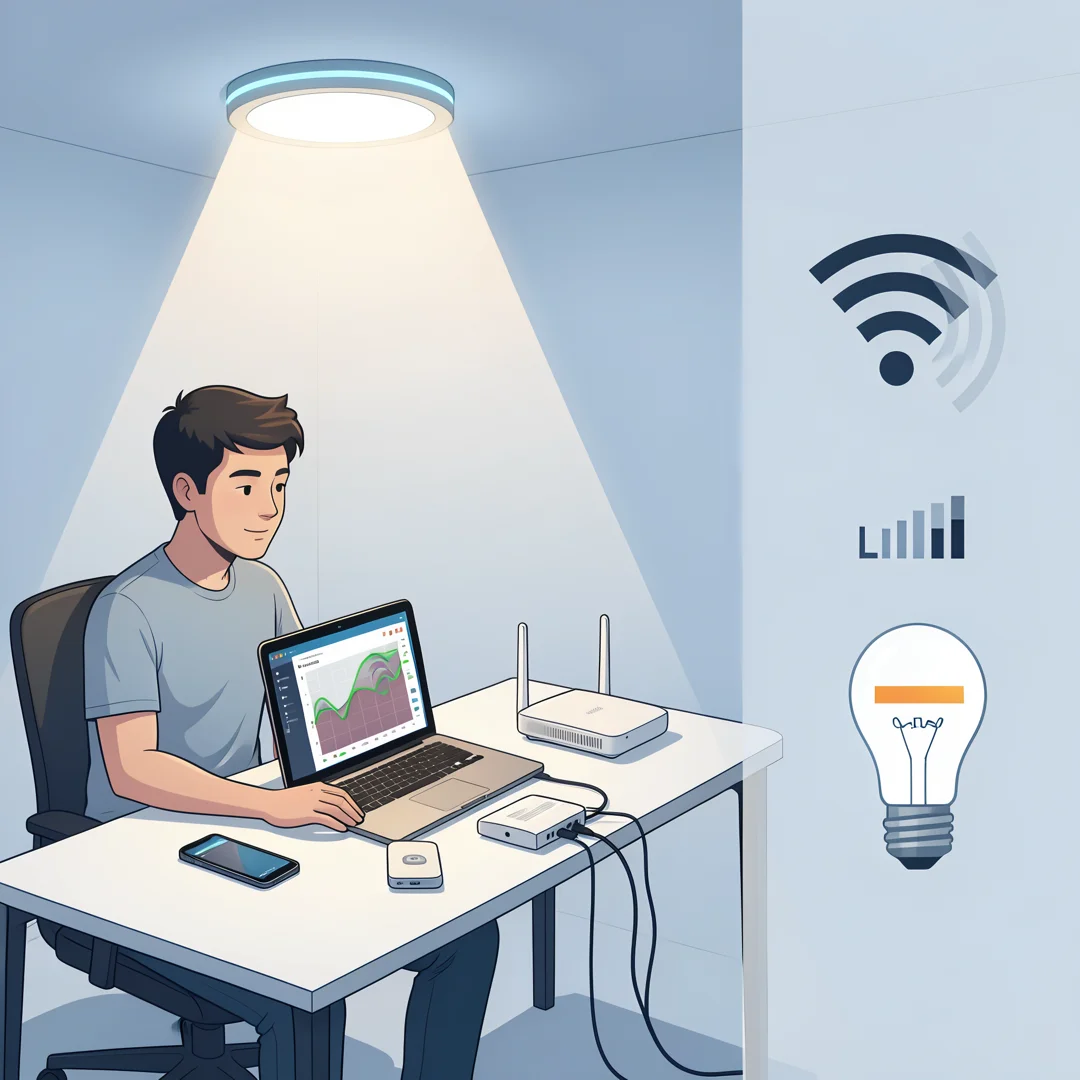
Inventory your current wireless environment. Where is Wi-Fi congested? Where do radio waves cause problems or raise security concerns? What lighting do you already have, and is it LED? Measure current speeds, latency, and interference levels. This baseline will help you compare Li-Fi’s performance later. Talk to users about their pain points. A Li-Fi pilot should solve a specific, documented problem, not just be a novelty.
Step 3: Set clear goals
Define what success looks like. Goals should be specific and measurable. For example: "Achieve 500 Mbps downlink in the radiology suite with zero radio emissions" or "Provide secure video streaming to 10 devices in the boardroom without signal leakage." Write down your goals and share them with stakeholders. Clear goals keep the project focused and make it easier to decide whether to expand.
You now have a solid foundation for How Li-Fi Technology Could Change Wireless Communication. Apply the best practices above and revisit this guide as your needs evolve.